Notion Updates

Tracked by the FLO.W team

Notion is rebuilding its iPad app natively instead of wrapping the web app. The sidebar, inbox, Notion AI and search are already native and open faster. The native editor is still on the way: Notion plans to finish the native editor on phones first and then test it on iPad, with Apple Pencil support coming later.

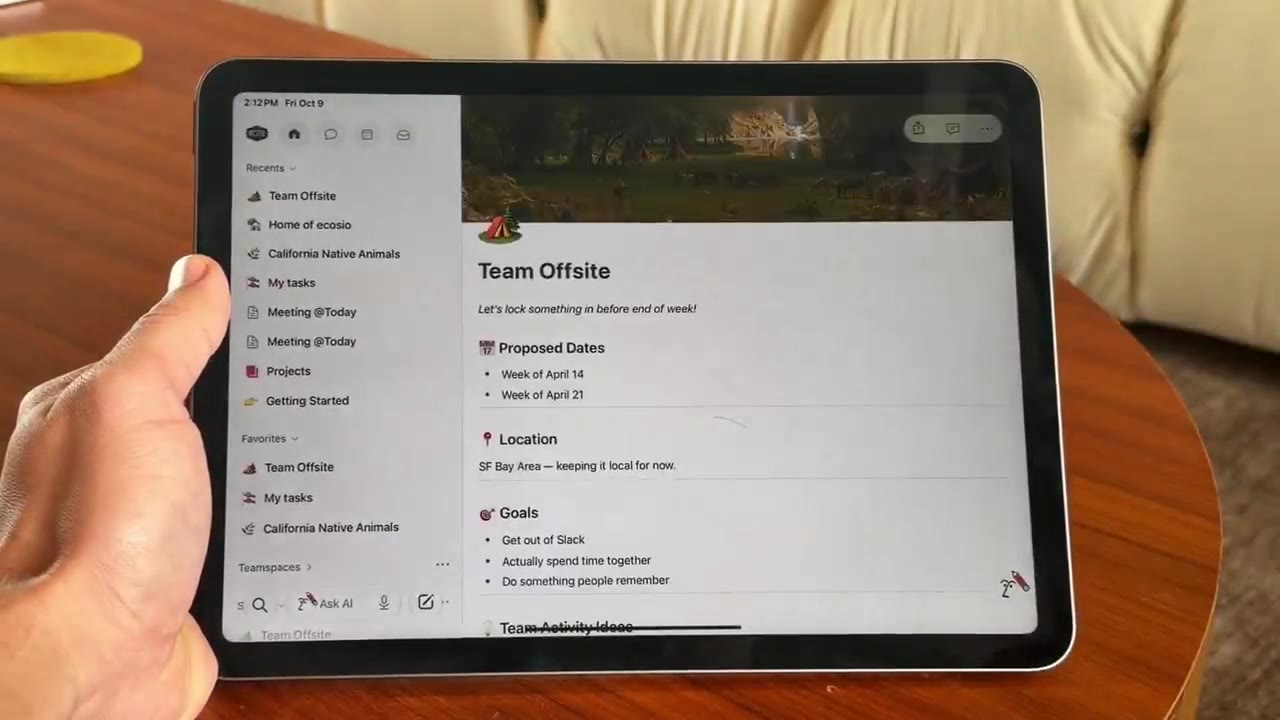
The sidebar and inbox on iPad are now native, so the page tree is no longer rendered by a web container.

The native sidebar in Notion for iPad

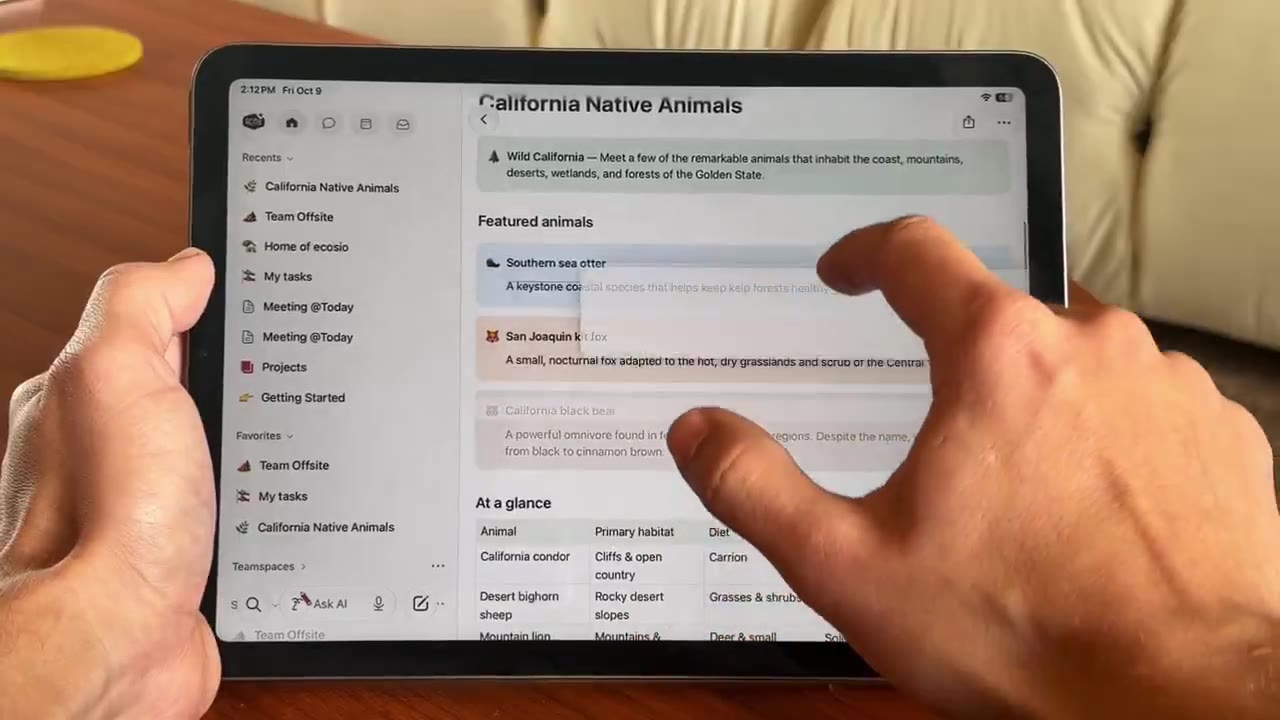
Search and Ask AI sit at the bottom of the sidebar and are native as well, so you can find pages in your workspace directly.

Native search and Ask AI entries at the bottom of the Notion iPad sidebar

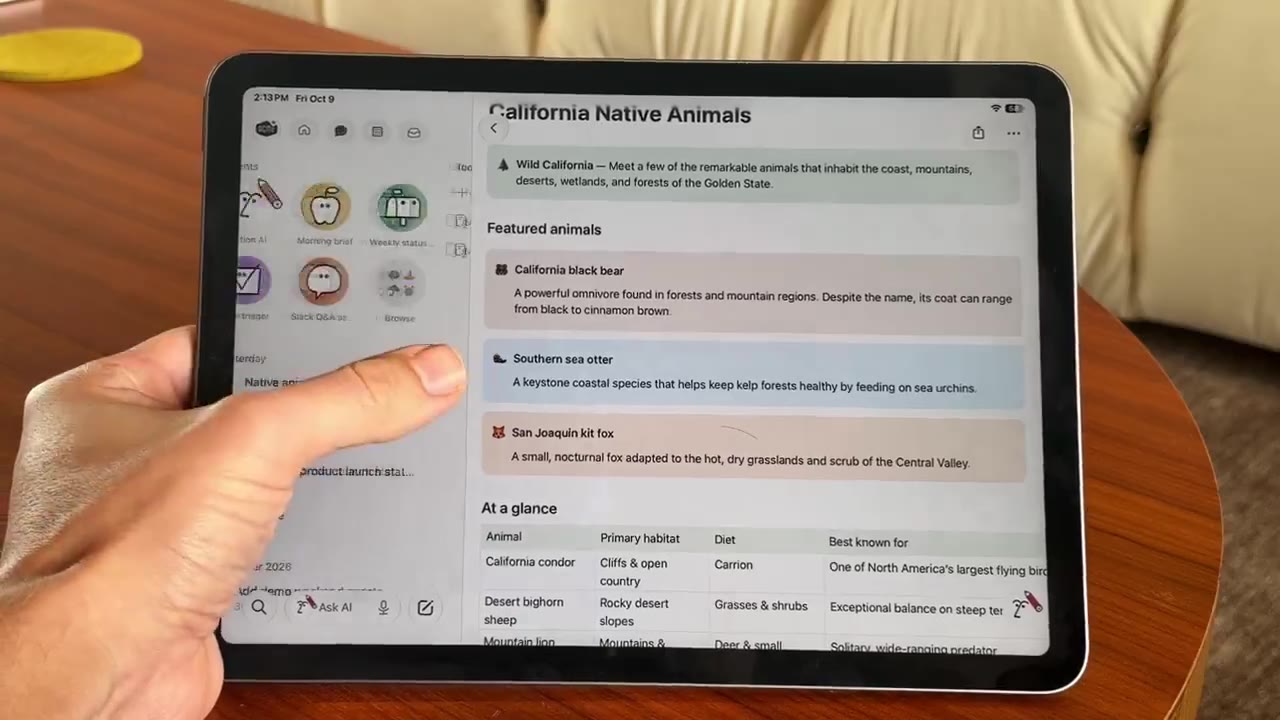
Notion AI is native too: tap Ask AI and the sidebar switches to the AI panel.

The native AI panel in Notion for iPad

In addition, on iOS 27 you can use Siri to find or create pages, start an AI chat, or record meeting notes.

Notion Settings now supports search. Open Settings and use the search box to jump straight to an option instead of paging through every section.

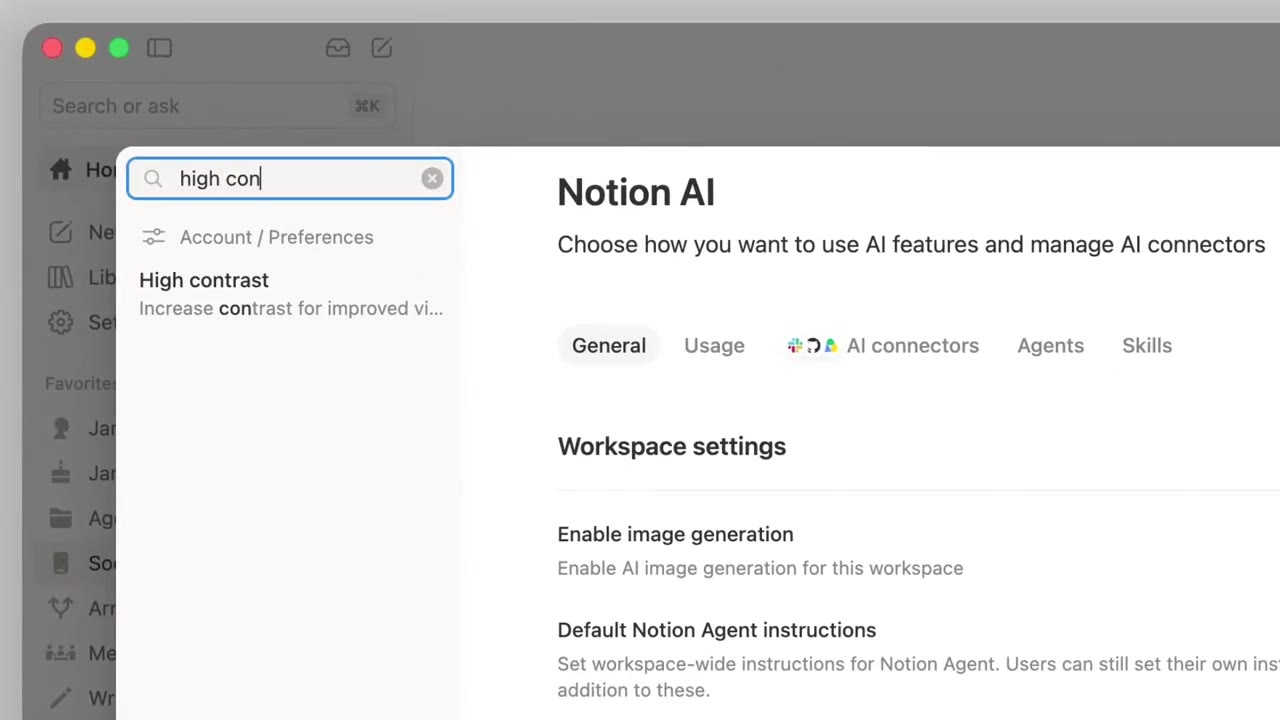
Below is Notion’s demo: type a keyword into the search box at the top left of Settings and the matching options are listed right away.

Typing a keyword into the Notion Settings search box

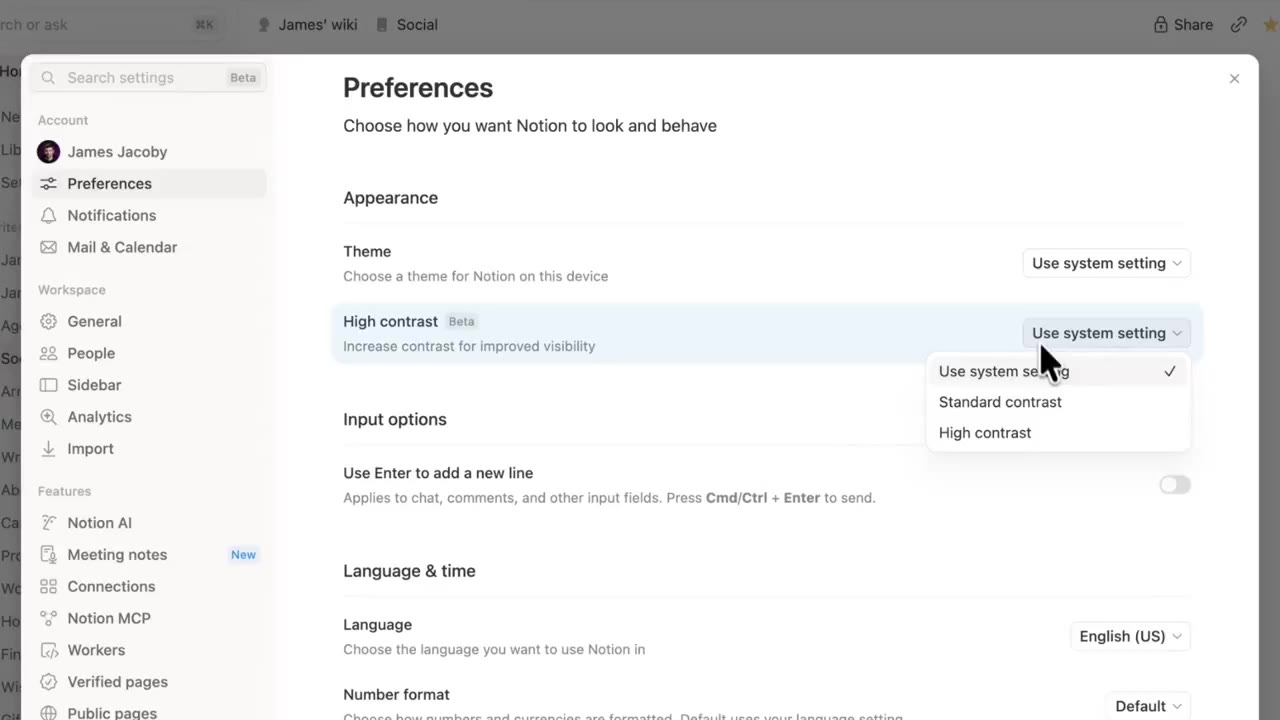
Click a result and Notion jumps to that settings page and highlights the item. For example, searching "high contrast" takes you to the contrast option in Preferences.

A search result jumping to the contrast option in Preferences

Notion has launched sidebar presets for workspace admins. Admins can set a default sidebar for new members, and everyone can add a preset from the "+" menu and then adjust it to their own habits.

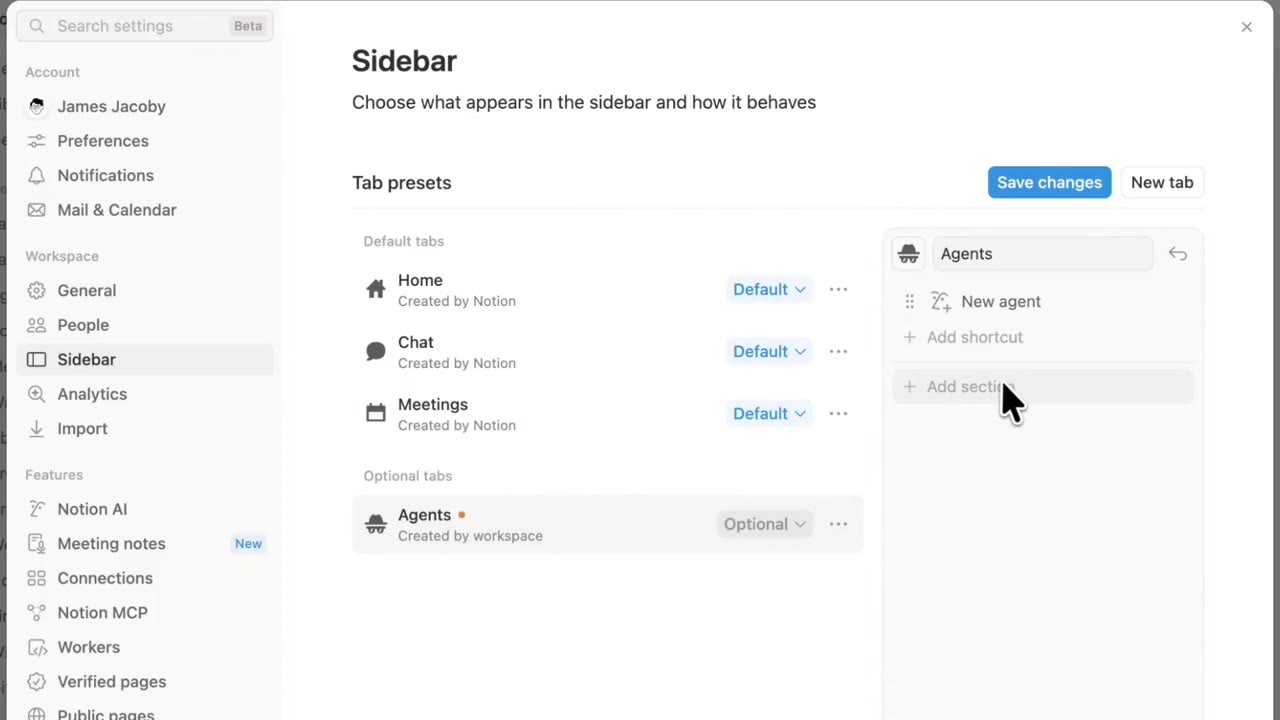
Admins edit presets in Settings → Sidebar and set one as the default sidebar for new members. Below is the settings page from Notion’s demo.

Tab presets in Settings → Sidebar

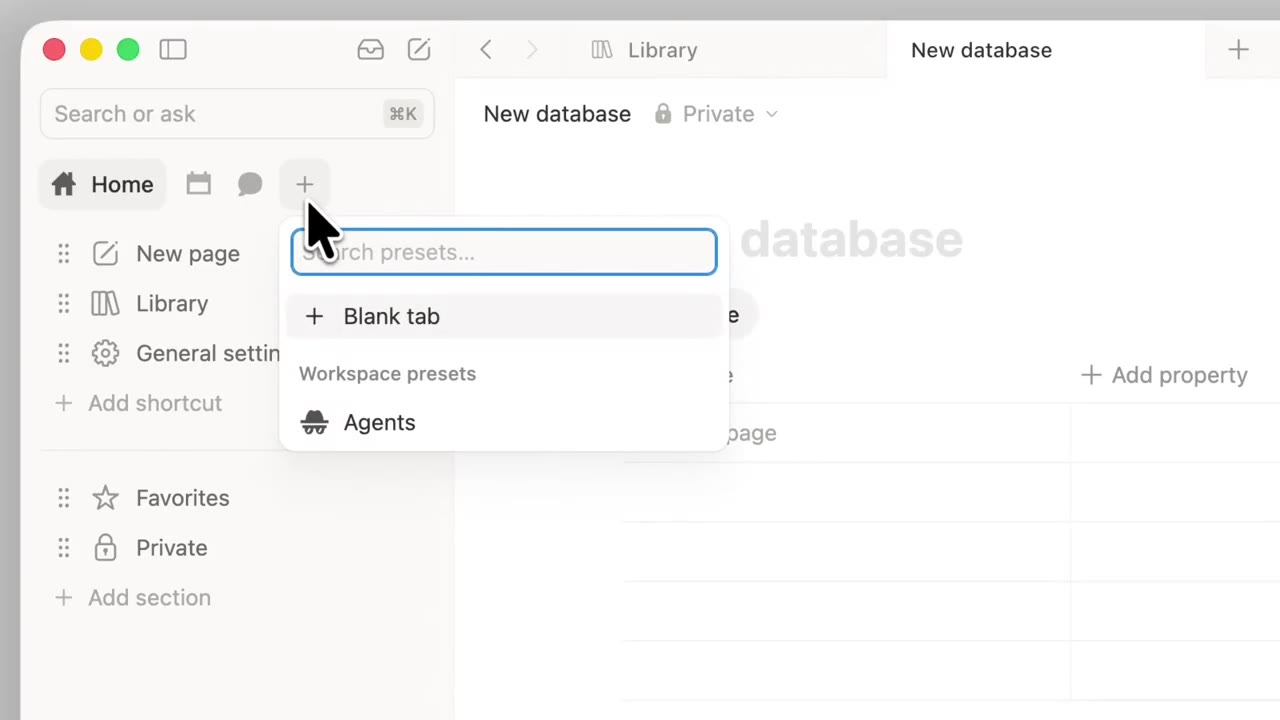
Regular members can click the "+" menu at the top of the sidebar, add a preset under "Workspace presets", then adjust it themselves.

Workspace presets in the sidebar “+” menu

Notion has built a native editor for iOS and is opening it for testing through TestFlight. Notion says the new editor is faster and more stable when you type and edit.

How to join: install TestFlight on your iPhone, open Notion’s test invitation link to join the beta, then open any page to use the new editor.

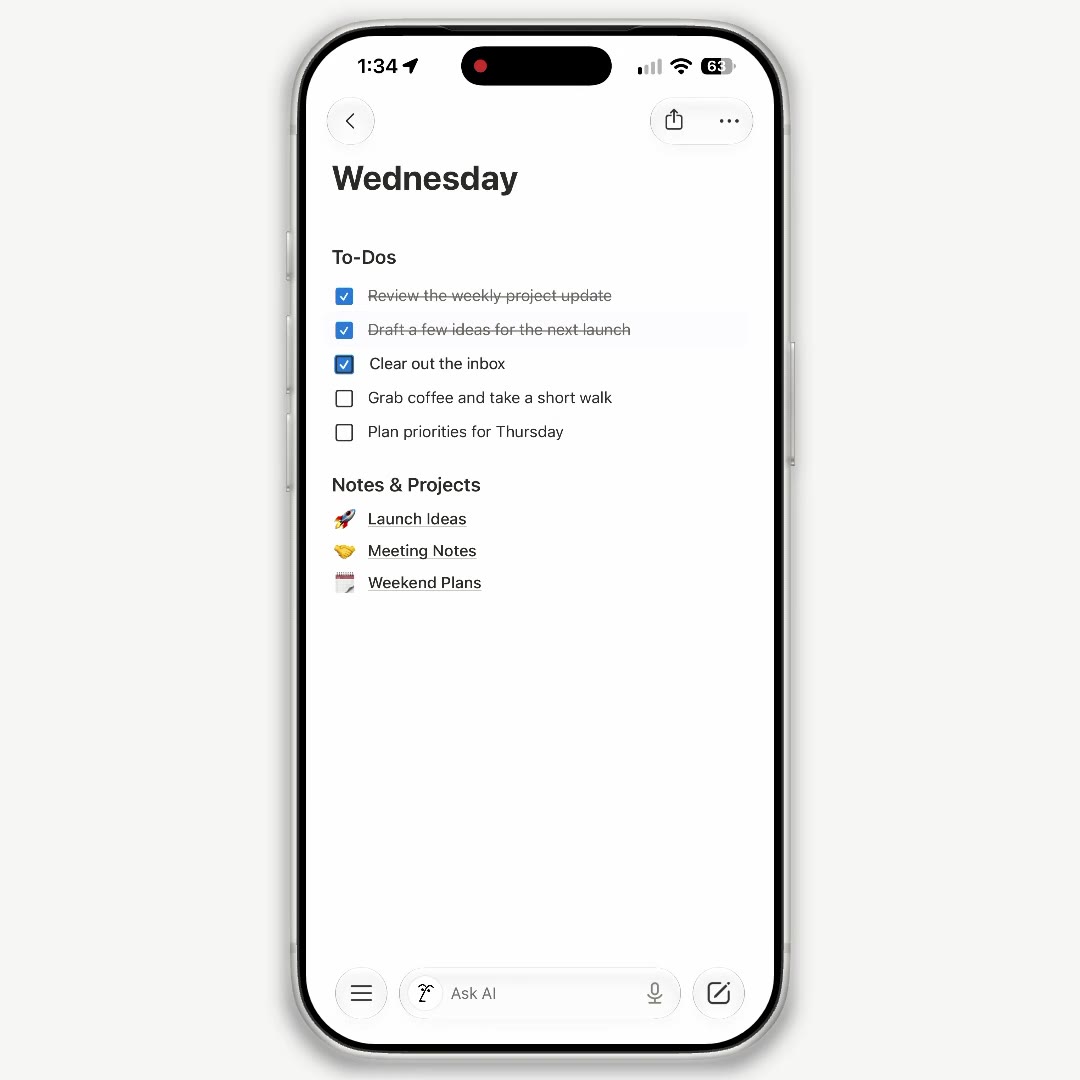
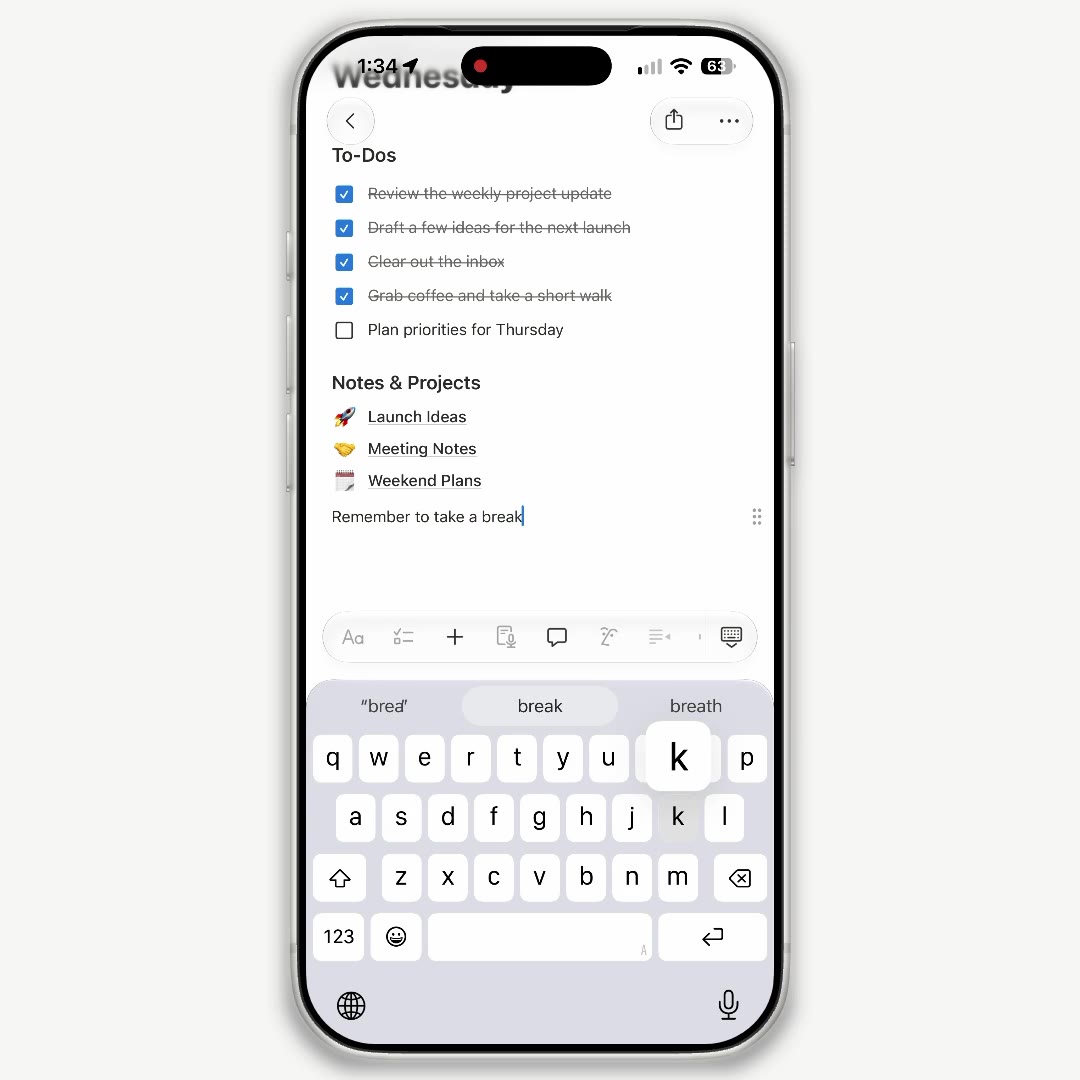
The editing screen of Notion’s native iOS editor

Tap anywhere on a page to start typing. To-dos, lists and page links can all be edited in place.

Editing to-dos, lists and page links in the native iOS editor

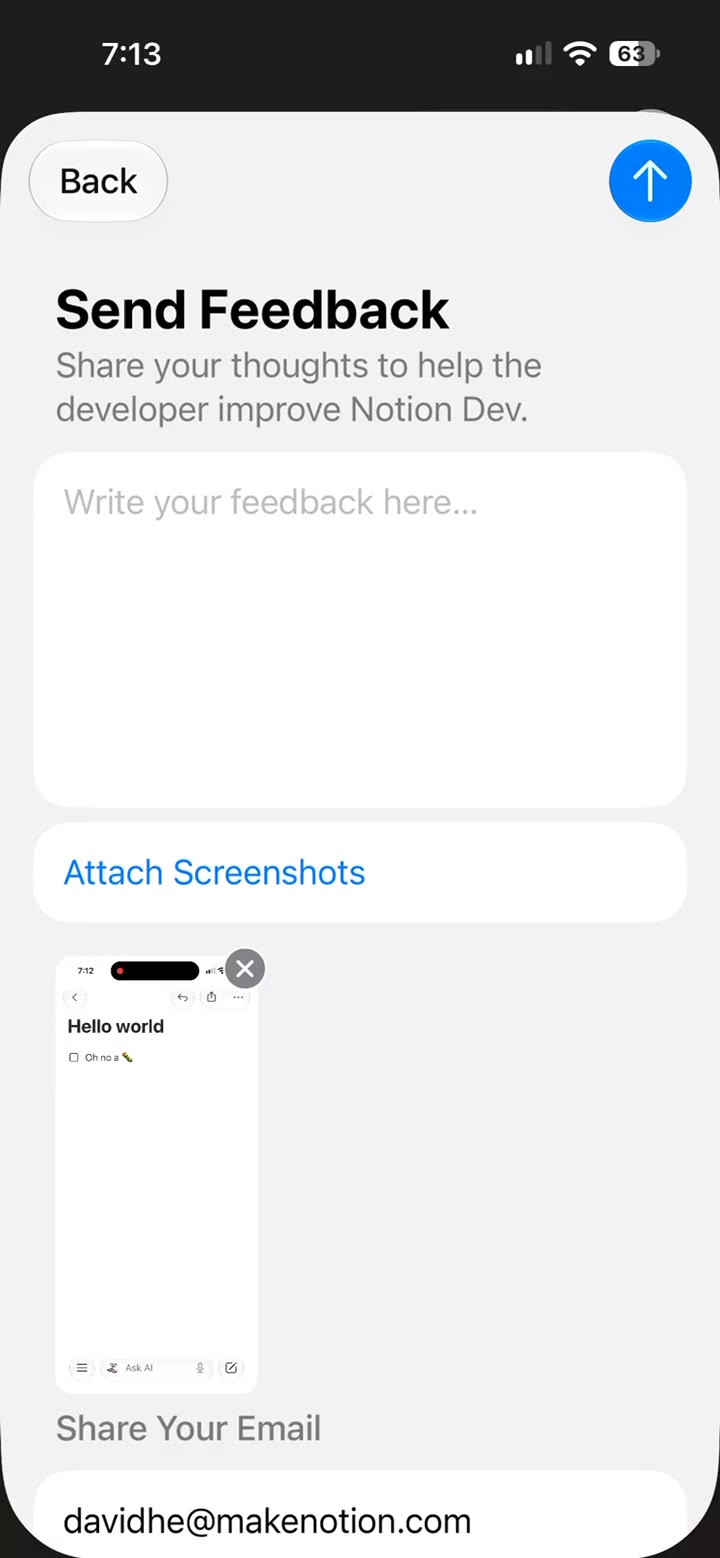
If you run into problems during testing, take a screenshot in the beta, then attach it in the TestFlight feedback window and submit it to Notion.

Submitting a screenshot through the TestFlight feedback window

The native editor for Android is still in development, and Notion says it will open testing when it is ready.

Notion recently added Claude Sonnet 5.5, Haiku 5.5, Fable 5 / 5.1 and GPT-6.1 Sol. You can pick any of them in the model picker.

  • Claude Sonnet 5.5 (Sept 29): available the same day Anthropic released it.
  • GPT-6.1 Sol (Sept 29, Beta): in the Notion Agent model picker, under the "Using ChatGPT plan" group.
  • Claude Haiku 5.5 (Oct 8): available on the day Anthropic released it, under the Claude group.
  • Claude Fable 5 / 5.1 (June 9 / Sept 1): turn it on in Settings → Notion AI → Restricted Access Models. Fable 5 is for Business / Enterprise, and 5.1 works with Custom Agents and Notion Agent.

Notion has added a Notion MCP management page to Settings. It shows the MCP clients connected to your workspace and lets you discover, enable or add more from a directory.

How to use it: open Settings → Notion MCP. Under "Manage workspace clients" you can see the clients that are enabled (for example ChatGPT, Claude and Muse). Under "Discover" you can browse the directory (for example Composio, Cursor, Devin and Figma), then click Enable or Add an MCP client.

On plans: according to Notion’s developer docs, Notion MCP can be connected on every plan, but some tools (such as advanced search and AI search) require Business or Enterprise. Notion has not said separately which plans can see this settings page.

The page lists the clients that are currently enabled, plus the directory entries you can connect next.

Notion now lets you connect ChatGPT Plus, Pro or Go so the GPT models you pick in Notion Agent draw on your ChatGPT allowance. As of 2026-10-09, ChatGPT Go is covered too; it was previously limited to Plus and Pro.

Who can use it: members (not guests) of Business or Enterprise workspaces with ChatGPT Plus, Pro or Go. Your ChatGPT and Notion accounts can use different email addresses. This only applies to Notion Agent, not Custom Agents.

How to use it: open Settings → Notion AI → Usage, or go to "Subscriptions" in the model picker, connect your ChatGPT plan, then choose a GPT model in Agent. Auto and non-GPT models still use Notion credits. If your ChatGPT allowance runs out, Notion asks before switching to Notion Credits.

See the help article "Use your ChatGPT plan with Notion Agent" for the official details.

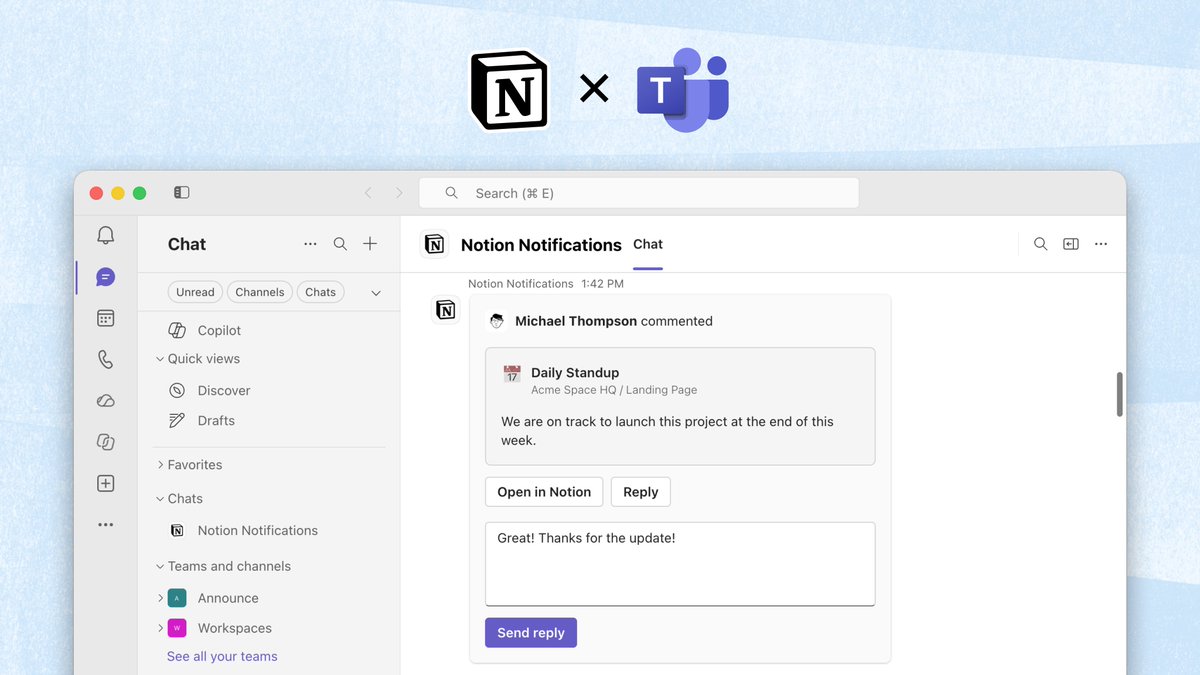
Notion notifications can now be pushed to Microsoft Teams. In the "Notion Notifications" chat in Teams you can see comment cards, open them in Notion, or reply directly.

How to use it: in Notion, open Settings → Notifications → Connected Apps and connect Microsoft Teams.

A Notion comment notification card in Microsoft Teams

Once connected, relevant Notion notifications show up on the Teams side. Click "Open in Notion", or type a reply in the card and send it.

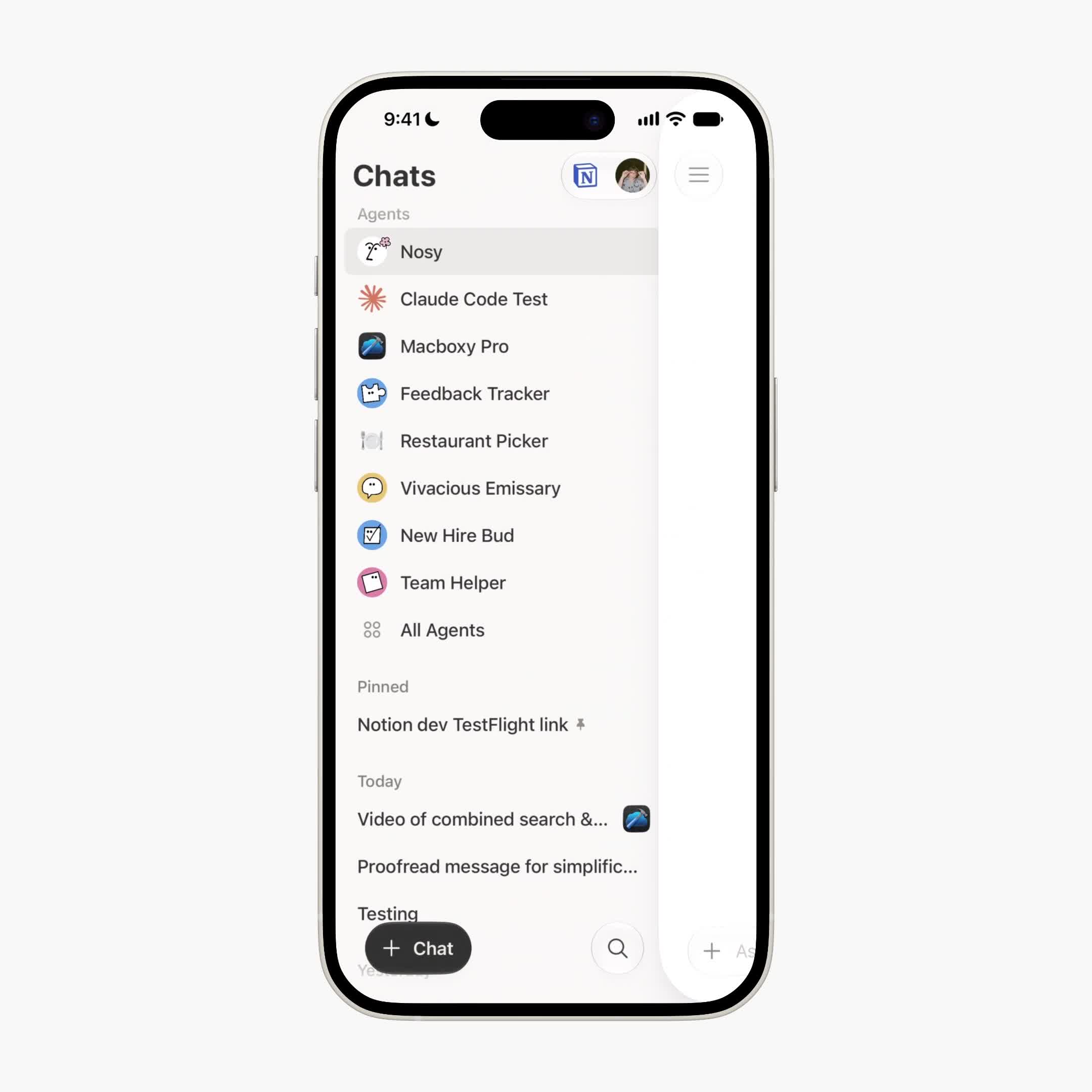
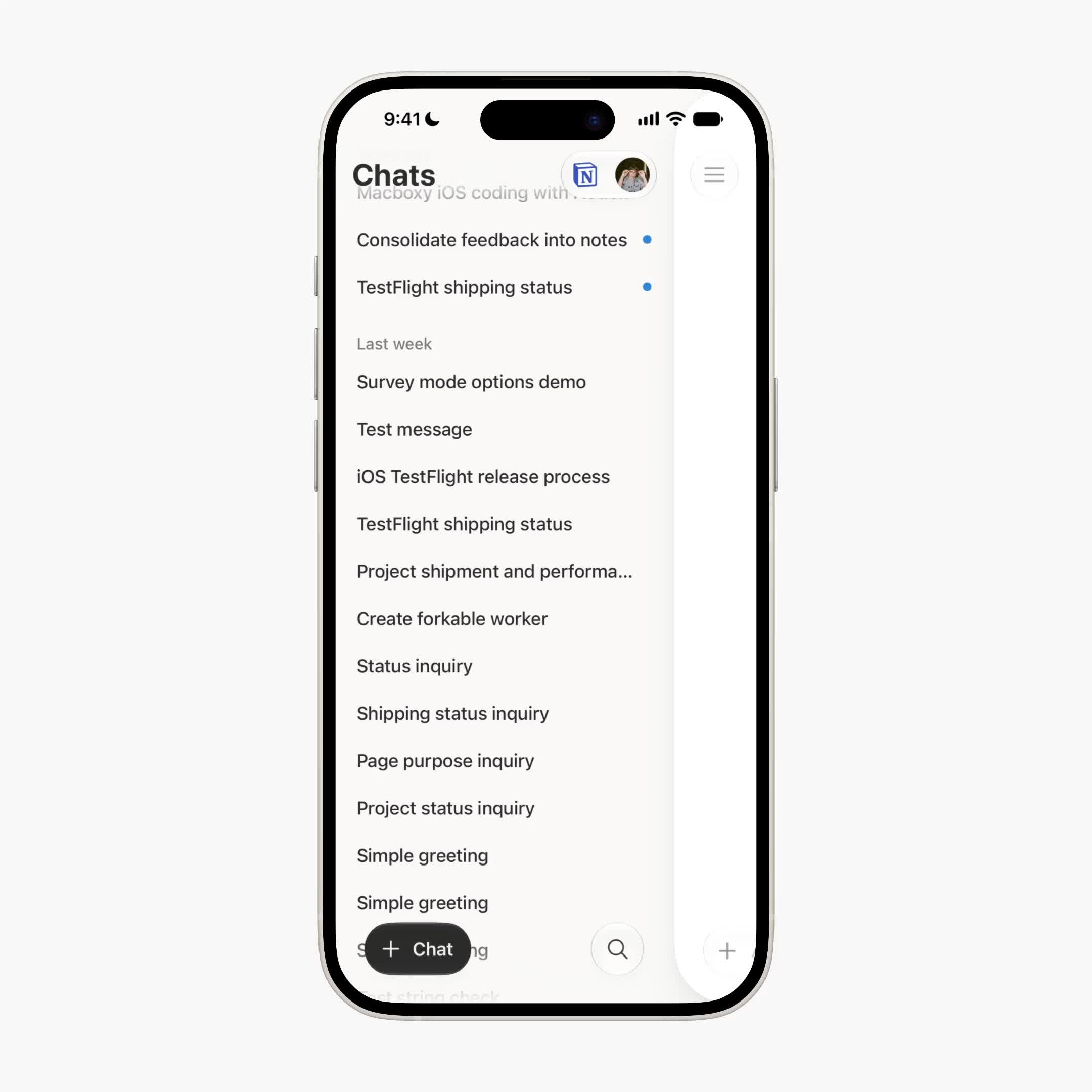
The Notion Agents iOS app has a redesigned sidebar. Both Notion and its designer describe it as rolling out now.

How to use it: update the Notion Agents app from the App Store, then open the sidebar to see the new layout. This is a sidebar redesign inside the Agents iOS app, not the main sidebar on desktop.

The new sidebar in the Notion Agents iOS app

The sidebar’s look and navigation have been refreshed, making it easier to jump between Agent-related entries on your phone.

Navigation entries in the new Notion Agents iOS sidebar

Notion now supports property-level permissions for databases: each column can decide on its own who can view it and who can edit it. Sensitive data can be visible only to the people who need it, and a status or approval column can be editable by just a few.

How to use it:

  1. Open the source database in a table view on web or desktop (not a linked view).
  2. Open the column header menu and choose Property access.
  3. Set the default access for everyone, agents and connections first, then add exceptions by person, group, person property or agent.
  4. Use Preview to see what a given person would get, then save.

Your workspace must be on Business or Enterprise, and you need Full access to the database. People with Full access are never restricted by a column rule. Title, ID, Created time / Created by, Last edited time / Last edited by, certain synced properties, and subitem or parent relation columns cannot be restricted. A database can have permissions on up to 20 properties; wiki databases are not supported, and rules cannot be created or changed on mobile (existing rules still apply). The first rule on a column can take a few minutes to save on a large database.

Agents can get their own column permissions too. If a user cannot see a column, Notion AI or their agent usually cannot read it either, and may report that the column does not exist.
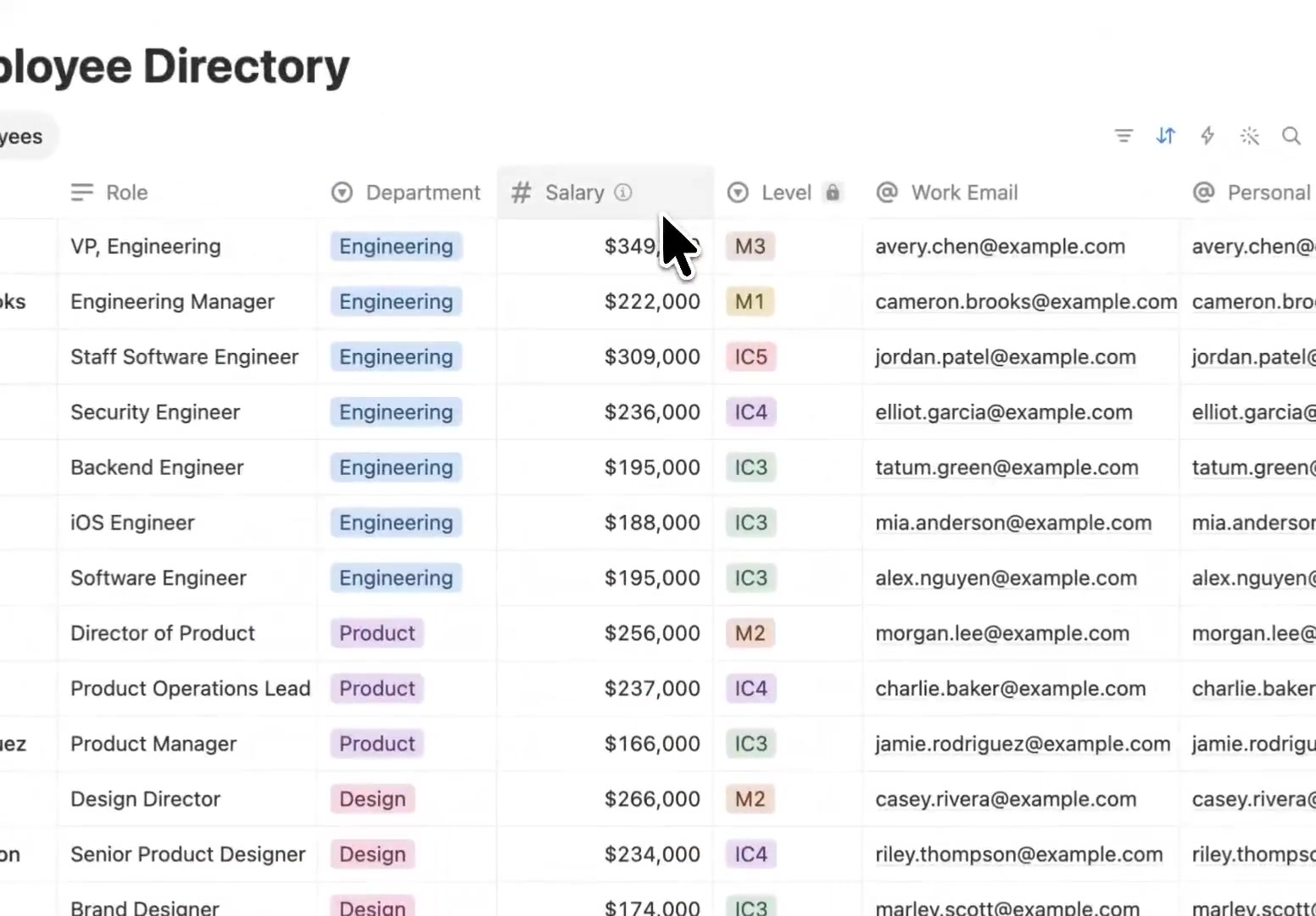
A lock icon next to a restricted column header in a database table

A restricted column shows a lock icon next to its header (the Level column in the image).
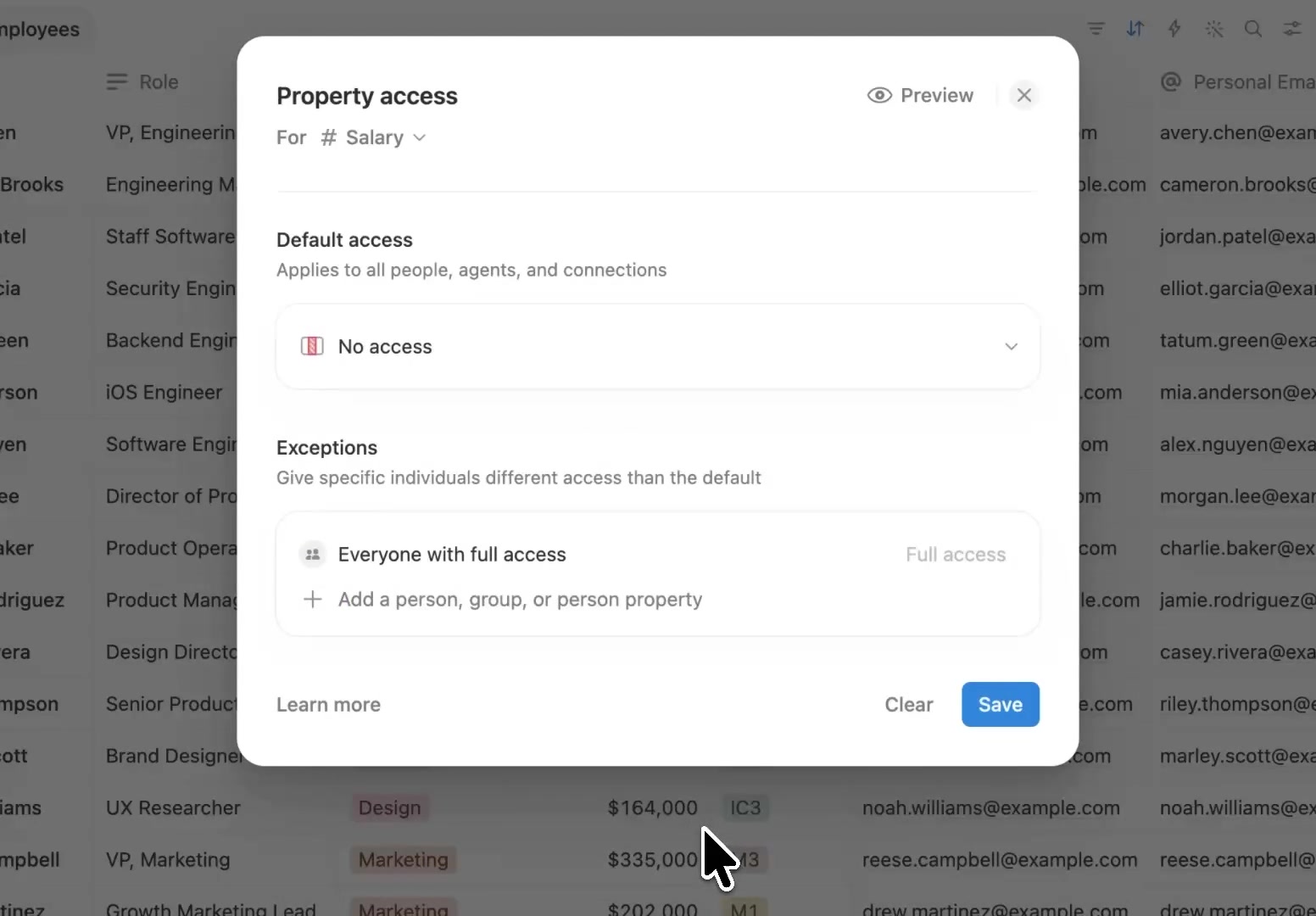
The Property access panel with default access set to No access and an exception for everyone with full access

After setting the default to No access, add exceptions for the people, groups or person properties that need access, and check the result with Preview before saving.

Column permissions control who can see and edit each column of a table. For how to set up permissions at the page, member and teamspace level, see Notion Team Collaboration Guide: Feasibility and Practical Setup for Teams in China. Used together, they give you fairly complete permission control for team collaboration.